Above the Waterline: A Staged Continuity Plan for Records Still Sitting in Paper
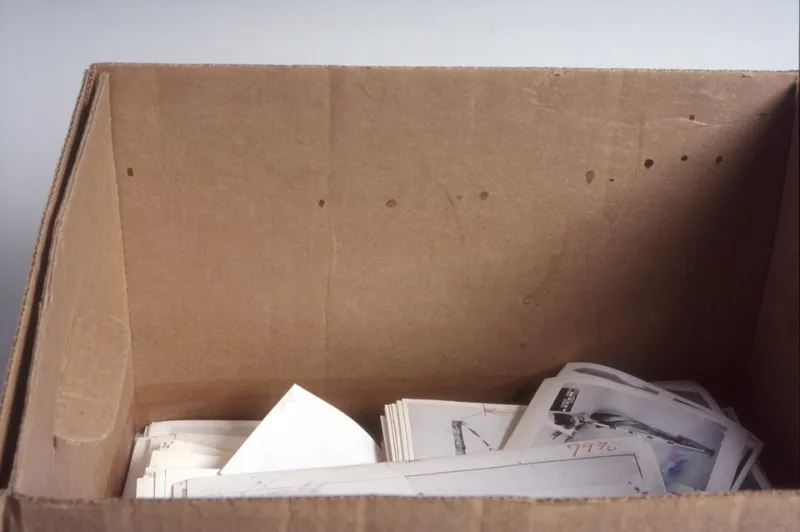
Photo: Heritage Preservation Department - MNHS, CC BY-SA 4.0, via Wikimedia Commons
Every organisation that has run a scanning programme for more than a year holds the same awkward residue: the boxes that were never in scope, the ledgers nobody wanted to feed through a feeder, the deeds, the personnel files from a predecessor company, the construction pack for a building sold in 2011. These are frequently the oldest and most legally consequential records in the building, and they are usually stored in whichever room had space.
The irony is structural. The act of digitising a record set moves it up the priority ladder in everyone's mind, while the paper left behind quietly falls off it. Business continuity plans list servers, telephony and payroll. They rarely list a shelf.
The unscanned box is the exposed box
Insurance will typically meet the cost of replacing a carpet, a ceiling tile or a desk. It will not reconstitute a 1998 board minute that exists in one physical copy. Nor does the risk arrive theatrically. In practice, water damage in UK commercial premises comes from a short list of unglamorous sources: a failed flexible connector on a tap, a blocked condensate drain above a suspended ceiling, a sprinkler head knocked during maintenance, a flat roof that has been holding for fifteen years, and, in the winter months, ground water arriving through a loading bay.
The clock matters more than the cause. Paper that is wet but clean can often be salvaged if it is dealt with inside 48 hours. After that, mould becomes the dominant problem, and mould does not negotiate. A plan that assumes someone will 'deal with it on Monday' is not a plan.
Stage one: map the store against hazards that actually arrive
Start with a walk, not a spreadsheet. Take the floor plan and trace the routes water would take towards each storage area. The questions are consistent across sites:
- What plant sits directly above the shelves? Boiler rooms, kitchens, toilets and air-handling units are the usual culprits, and a plant room one floor up is directly above something.
- Where are the risers and sprinkler valves in relation to the box stacks?
- Is anything stored on the floor, or on a bottom shelf less than 150mm above it?
- Does the site appear on the Environment Agency flood map, and separately, is there a surface-water history in the area that the map does not capture?
- Are there temporary holdings — boxes in a corridor awaiting collection, records in a unit during an office move — that sit outside the formal store and outside anyone's risk register?
The output of this stage is a single annotated plan with three or four marked risk zones. It should take an afternoon and it is the most valuable afternoon in the whole exercise.
Stage two: rank the holdings by what water destroys first
Not every box deserves the same protection. A four-tier ranking is enough:
Tier A — unique, irreplaceable, and legally or contractually required: deeds, executed agreements, statutory registers, board and committee minutes, intellectual property records, personnel files still inside a retention period, health and safety documentation for occupied buildings.
Tier B — unique but recreatable at cost: signed supplier contracts held in duplicate elsewhere, older project files.
Tier C — replaceable from a third party: bank statements, utility records, insurance schedules.
Tier D — already imaged, or due for disposal under the retention schedule.
Tier D is the quick win. Physically removing material that has already been captured frees shelf space and reduces the volume exposed, and it makes the remaining problem smaller rather than merely better organised. Guidance such as PD 5454 on the storage and exhibition of archival materials is worth consulting for shelf clearances and environmental tolerances, though for most offices the practical version is simpler: nothing on the floor, nothing under a pipe, nothing in a room with a window that does not close.
Stage three: build the emergency scan list
This is not a renewed digitisation project. It is a targeted, time-boxed capture exercise aimed squarely at the material that would hurt most if it were soaked. Select a defined set per Tier A holding — perhaps the ten or twenty documents that would be demanded first by a solicitor, an auditor or a regulator — and scan them at a modest but defensible quality setting during quiet weeks.
Two disciplines make this work. First, cap the scope firmly; an emergency list that expands into a general project will stall. Second, store the output somewhere that is not the same building as the paper. A scan sitting on a server in the flooded basement has solved nothing.
Salvage: the first 48 hours
The instinct to spread wet paper out on radiators is wrong and does lasting harm. Sensible first moves are these:
- Photograph the box labels before anything moves. Provenance is easier to preserve than to reconstruct.
- Do not separate wet sheets to dry individually. Wet paper tears and cockles; keep bundles together and interleave with blotting material if a conservator advises it.
- If the quantity is significant, freeze the records within 48 hours and bring in a document recovery specialist to freeze-dry them. Most business insurers have a preferred supplier, and the contract should be checked before it is needed.
- Keep the room cool and ventilated, not warm. Heat accelerates mould.
- Log what was affected, where it went and who authorised the transfer. Salvage without a chain of custody creates a different compliance problem later.
The one-page grab sheet
Everything above fails at 7am on a wet Tuesday unless it fits on one side of A4. The grab sheet should carry: the names and numbers of the duty contact, the insurer and the recovery contractor; the location and priority tier of each store; the order in which boxes should be moved; the salvage rules in five short lines; and a clear statement of what must not be moved by untrained staff.
Keep a copy at reception, a copy in the continuity folder and a copy off site. A laminated sheet on the wall of the store is a good idea only if the store itself is not the thing at risk.
Rehearse when the weather is boring
The final stage costs almost nothing. Once a year, in a dry month, walk the store with the grab sheet in hand and check that every box location is still accurate, every phone number still connects, and the recovery contract is still live. Ten minutes of mild embarrassment in February is preferable to discovering in December that the duty contact left the company in April.
Continuity planning for paper is not a large project. It is a walk, a ranking, a short scan list and a page on the wall — built on the recognition that the records still in boxes are, by definition, the ones with no second copy.