Evidence With a Long Memory: Building Receipt Records That Still Answer Months Later
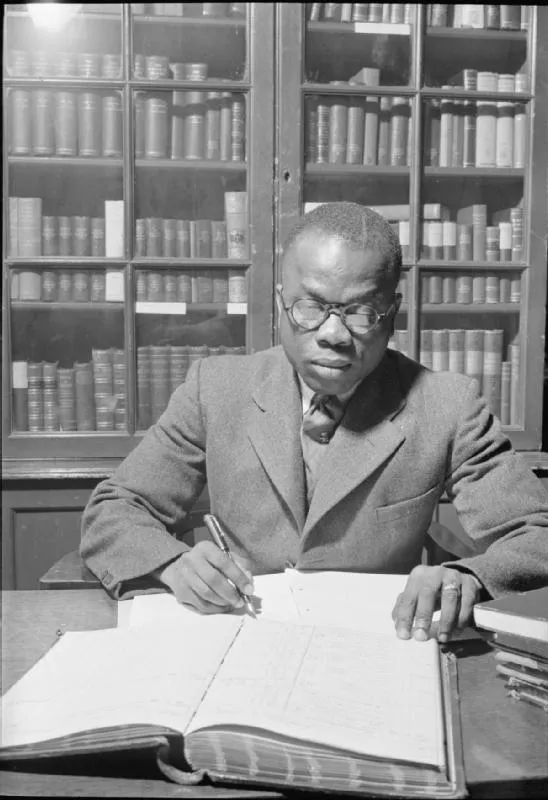
Photo: Ministry of Information Photo Division Photographer, Public domain, via Wikimedia Commons
Quarterly reporting has a way of exposing the gap between having a receipt and being able to show it. As more UK businesses move into quarterly digital reporting in 2026, the paper trail is no longer a year-end concern. It becomes a routine question asked every few months: where is the evidence, what does it prove, and can someone else follow the thread without asking the person who filed it?
The answer is not a more elaborate filing cabinet. It is a capture routine that treats receipts, invoices and supporting documents as records with a working life beyond the quarter. This article is about that routine. It is not tax advice; reporting obligations should be confirmed with an accountant or adviser.
Start with the question the record must answer
Most capture routines begin with the folder. A better starting point is the question someone will ask later. In three months, a reviewer may need to connect a bank payment to a supplier, a date, a gross amount, a VAT figure and a business purpose. If the document cannot support that connection, it is not yet a usable record.
That does not mean capturing everything. It means capturing enough. A receipt photographed in good light, with the supplier name, date, total and VAT clearly visible, is worth more than a dozen tidy filenames attached to unreadable images. The routine should protect legibility first, structure second and storage third.
A naming grammar that survives handoffs
File names are not glamorous, but they are one of the few pieces of metadata that travel with a document into almost any system. A simple grammar works better than a creative one. For example: date, supplier, amount and document type, separated consistently. The exact pattern matters less than the discipline of using it.
Avoid names that depend on local shorthand. "Misc Feb" means little to a new starter or an accountant reviewing the quarter. A name such as 2026-05-14_supplier-name_42-80_receipt is dull, searchable and durable. Where accounting software will rename files on import, keep a copy of the original file name in the handoff index so the trail does not break.
The same logic applies to folders. A tax-year and quarter structure is usually enough for small and mid-sized teams. Deeper nesting often creates more places to lose a document than it prevents.
Capture at the point of spend, not the point of panic
A receipt captured on the day of purchase takes seconds. A shoebox captured at quarter-end takes an afternoon and produces worse images. The practical aim is to make same-day or same-week capture the default, with a controlled phone camera or a desktop scanner depending on the volume.
Phone capture is acceptable for many low-risk receipts if the image is flat, in focus and complete. The common failures are familiar: a thumb over the total, a curled thermal receipt, a shadow across the VAT line. A simple rule helps: capture the whole document, check the total and date on screen, then move on. For invoices and multi-page supporting evidence, a scanner remains the more predictable route.
An email inbox can serve as a capture lane for digital receipts, but it should not become the archive. Forwarding receipts to a shared address is useful only if someone processes that inbox on a schedule. Otherwise it becomes another in-tray with better branding.
Give exceptions their own lane
Every capture routine meets documents that do not fit. The receipt is faded, the supplier is unknown, the amount does not match the bank line, or the document is a duplicate. If these items are mixed back into the main flow, they slow everything down. If they are ignored, they become quarter-end surprises.
An exception register is the simplest remedy. It can be a shared spreadsheet with five columns: date received, document, reason for exception, owner and status. The register is reviewed weekly, not monthly. The point is not to create bureaucracy but to make unresolved evidence visible while it is still cheap to resolve.
A faded thermal receipt, for example, may need a supplier duplicate or a bank statement reference. A missing VAT figure may need a clearer copy. A duplicate may need a note explaining why two copies exist. Each exception should end with a resolution or a documented decision, not a silent deletion.
The weekly ten-minute reconcile
Quarterly reporting is much easier when the capture routine includes a small weekly check. Ten minutes is often enough to match captured items against bank transactions or accounting entries, flag anything unmatched and review the exception register.
This is not a full bookkeeping review. It is a capture quality check. Are the images readable? Are the names consistent? Are there items in the inbox that have not been processed? Are there exceptions older than a week? The answers should be visible without opening every file.
A weekly rhythm also prevents the end-of-quarter pile from becoming a project. Teams that reconcile weekly tend to discover missing receipts while the supplier still remembers the transaction. Teams that reconcile quarterly tend to discover them when the only remaining option is a best guess.
Retention that matches the obligation
Receipts and supporting records should be kept for as long as the business needs them, which depends on legal, tax and operational requirements. The capture routine should make retention practical rather than theoretical. That means a clear location, a consistent structure and a deletion date that someone actually owns.
A retention label in the folder structure or index is usually enough. For example, records can be grouped by tax year and quarter, with a review date recorded in the handoff log. At the end of the retention period, deletion should be a deliberate act with a record of what was removed, not an accidental consequence of a storage clean-up.
Backups matter here. A receipt that exists only on one phone or in one email account is not a retained record. The capture routine should move evidence into a backed-up location within the working week.
The handoff is a document, not a hope
The final stage is the handoff to accounting software or an adviser. This is where many otherwise sensible routines fray. Files are emailed in batches, names change, and the connection between the document and the transaction is lost.
A better handoff is a small package: the image files, an index with file name, date, supplier, gross amount, VAT amount, category and transaction reference, and a short note of any open exceptions. The index can be a CSV that the adviser or software can check. It does not need to be elaborate, but it should be consistent.
Test the import before the quarter ends. Some systems limit attachment size, some rename files, and some accept only certain formats. A five-minute test prevents a quarter-end scramble. Keep a handoff log with the date, recipient and any rejected items so the trail remains visible.
A small routine with a long memory
Quarterly digital reporting rewards evidence that is easy to find and easy to explain. The routine does not need to be heavy. It needs a naming grammar, a capture habit, an exception lane, a weekly check and a handoff that leaves a trail.
Those disciplines take less time than a quarter-end reconstruction. More importantly, they give the receipt a long memory: a record that still answers the question months later, when the transaction is no longer fresh but the need to prove it remains.