Twelve Things That Stop a Feeder Dead: An Operator's Field Guide to Scanner Jams
Photo: Welsh Government, OGL 3, via Wikimedia Commons
A document scanner is a remarkably patient machine. It will pull through ten thousand sheets of ordinary 80gsm paper without complaint and then stop dead because someone fed it a cheque book.
The diagnosis is almost never mechanical. A feeder is built around an assumption of flat, uniform, single-ply paper of roughly consistent thickness, and it maintains that assumption using a small number of components: a pick roller, a separation pad or retard roller, a set of sensors and a fixed gap between the feed and separation surfaces. Anything that changes the thickness of the stack, the friction of the surface or the geometry of the leading edge will defeat the mechanism. Sometimes quietly, with a double-feed that corrupts the image. Often loudly, with a jam and a bill.
What follows is an operator's guide, not an IT manual. The framing is simple: know the tell, know the route, know the rule.
1. The staple nobody found
The tell: a dull metallic click on the first sheet, followed by a skewed pull and a rip at the top corner.
The route: stop the batch immediately. A staple that has passed into the transport path can scratch the glass or lodge against a sensor, and the second jam will be the expensive one.
The pre-feed rule: a tactile sweep of every bundle — fingers along both long edges — before the stack goes anywhere near the tray. Riffle, do not glance.
2. The paperclip that travels
The tell: usually no tell at all until the feeder stalls with the clip flattened against the separation pad.
The route: remove with tweezers, never a pen nib; inspect the pad for a groove.
The pre-feed rule: paperclips out of the room, not just out of the stack. A clip on the desk finds its way into the next batch within the hour.
3. Binder rings and lever-arch mechanisms
The tell: a heavy thud, then a jam that resists gentle pulling.
The route: power down before opening any cover. Ring mechanisms can bend the pick roller shaft.
The pre-feed rule: lever-arch files are de-blistered at a separate bench, never at the scanner.
4. Laminated certificates
The tell: the sheet stops square, halfway in, with no skew. Laminate is thicker, glossier and more rigid than paper, and it defeats the separation gap.
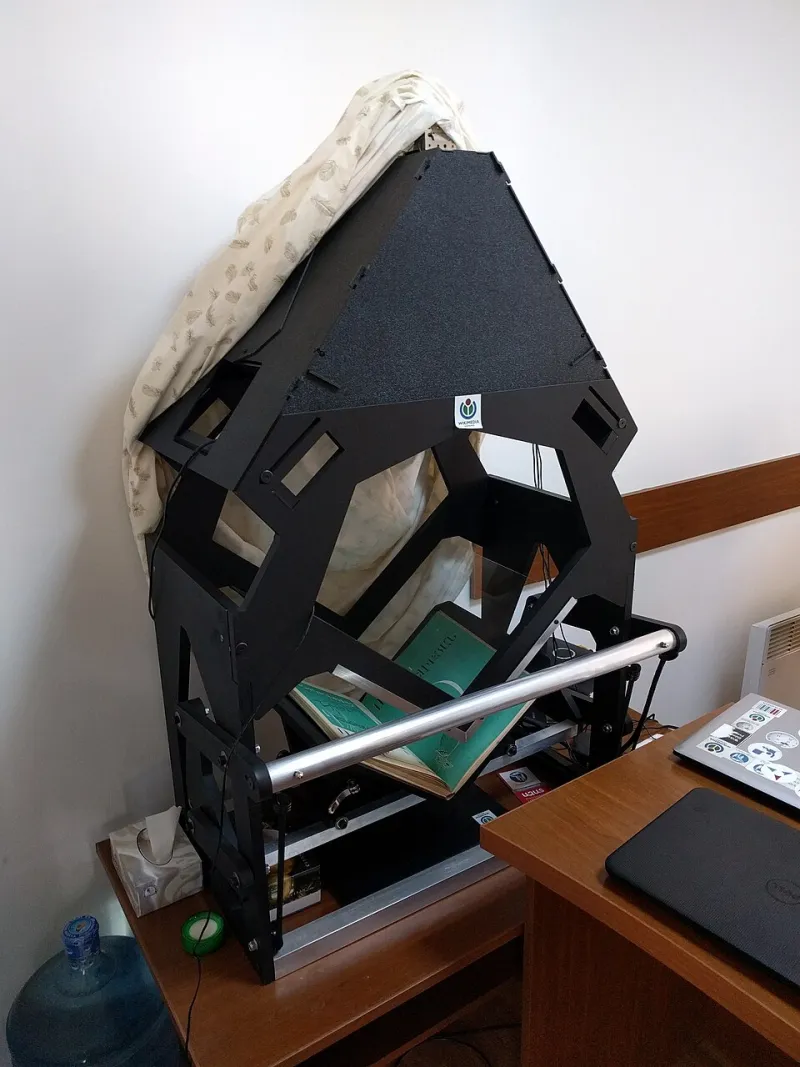
The route: use the flatbed or an overhead capture method. Never force it through.
The pre-feed rule: anything that reflects a window is a flatbed job. This includes certificates, ID cards, laminated licences and anything with a taped-on photograph.
5. Sprocket-stripped continuous stationery
The tell: a ragged leading edge catching on the entry sensor, then a fan-fold that concertinas inside the machine.
The route: stop, remove the whole run, and trim the torn edge square before re-feeding — or better, capture the run manually.
The pre-feed rule: continuous stationery is checked edge-first. If the perforations are torn, it does not go in the feeder.
6. Carbonless sets
The tell: a double-feed alert that will not clear, because the set is genuinely three sheets thick and the separator is doing what it was designed to do.
The route: separate the plies and scan them as a set, in order, noting the ply sequence in the batch header. Scanning a carbonless set as a single image loses the copy that matters.
The pre-feed rule: any document you can see through at the edge is a multi-ply. Count the plies before feeding.
7. Post-it flags and index tabs
The tell: a soft crumple, then a jam four sheets later as the flag peels and wraps the roller.
The route: remove the flag, keep it with the document for re-attachment, and clean the roller before continuing.
The pre-feed rule: flags come off at the preparation bench, and their position is recorded on a note rather than lost.
8. Thermal till rolls
The tell: a curl that spirals before the sheet reaches the separation pad. Thermal receipts also fade, scratch and react to handling.
The route: flatten under a weight for an hour; capture at reduced feed speed; check the image on screen, not later.
The pre-feed rule: anything that comes off a roll is decurled before it is fed. No exceptions.
9. Cheque books and paying-in stubs
The tell: an apparently flat document that is three thicknesses in the middle and one at the edges.
The route: scan the stubs individually or on the flatbed with a template.
The pre-feed rule: bound documents with visible stubs never enter the feeder. If the edge varies in thickness, the feeder will find it.
10. ID cards in laminating pouches
The tell: a glossy, rigid, slightly rounded rectangle that stops at the entry rollers.
The route: flatbed, front and back, with a note in the batch record that the image is a copy of a copy.
The pre-feed rule: cards go to the flatbed as a matter of routine. It is faster than clearing the jam.
11. Part-used adhesive label sheets
The tell: silence, then a jam with a sheet that is now stuck to two others.
The route: stop. Do not pull. Adhesive transferred to a roller will cause repeat jams for days.
The pre-feed rule: label sheets are captured on the flatbed, and never in a batch with other paperwork.
12. Taped repairs and dog-eared corners
The tell: a faint catch on the leading edge, then progressive skew across the batch.
The route: trim the corner square with a guillotine and re-scan. Where the repair is historic, photograph the damaged original before trimming.
The pre-feed rule: every stack is squared and corner-checked before loading. Five seconds of squaring saves a quarter of an hour.
A short jam taxonomy
Operators who record jams by class rather than by count find patterns within a fortnight:
- Class A — obstruction: a foreign object in the path. Staples, clips, rings.
- Class B — surface: glossy, laminated or thermal stock defeating the friction assumptions.
- Class C — multi-ply: carbonless sets, cheque books, anything with a stub.
- Class D — geometry: torn perforations, dog-ears, taped repairs, curled edges.
- Class E — residue: adhesive, flag gum and paper dust wrapping a roller.
A jam log that shows seventy per cent Class A is not telling you to buy a new scanner. It is telling you to move the de-stapling bench six feet closer to the feeder.